ScoutOS Changelog
Changelog
Recent updates to the Scout platform.
Split traffic between agent revisions
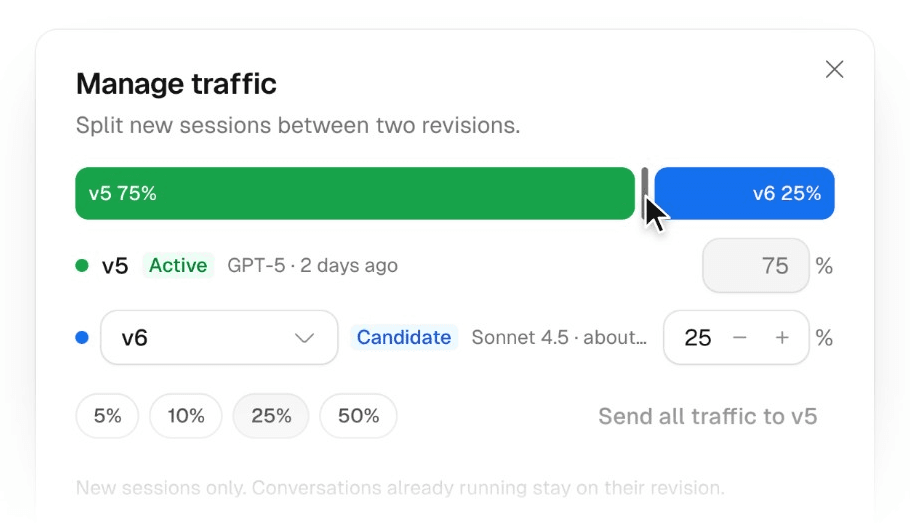
Try a new agent revision on live sessions before making it active for everyone. Save your changes without publishing, then split new sessions between the active revision and one candidate.
For example, after updating an agent’s instructions or model, send 10% of new sessions to the candidate while the active revision handles the other 90%. Compare responses and evaluation scores by revision, then adjust the share or promote when you’re confident. You can learn from real usage without switching everyone at once.
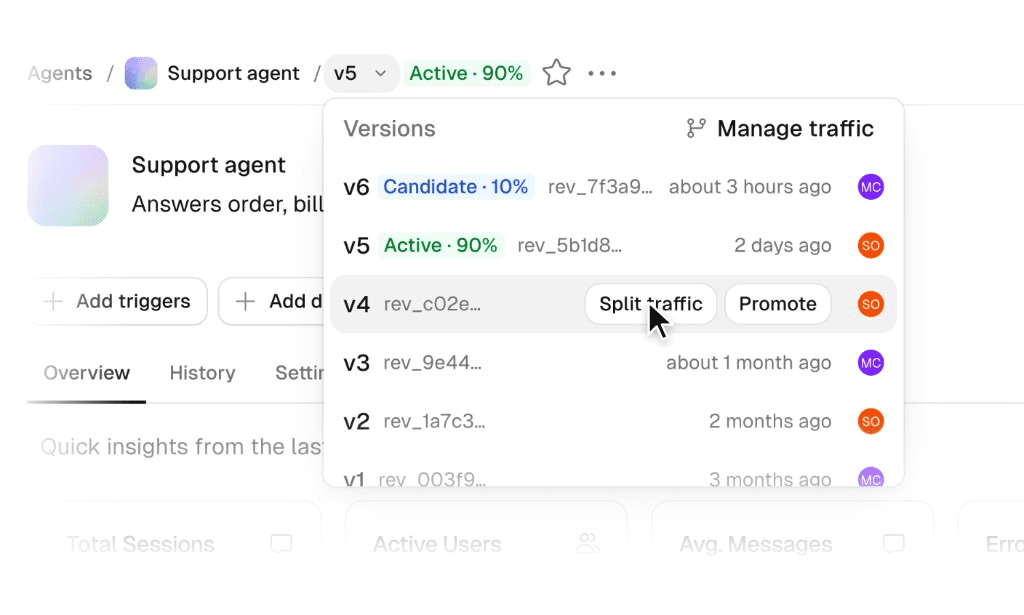
With traffic splits, you can:
- Start a split: choose a saved revision as the candidate and set its share of new sessions. The active revision gets the rest.
- Adjust the share: changes apply only to new sessions. Each running session stays on the revision it started on while that revision remains in the split.
- Promote when ready: promoting ends the split. Later messages use the revision you promoted.
You read the results and make the call. Scout does not pick a winner or roll back for you. Learn more in Agent Versioning.
Custom Roles
Workspaces now have four system roles: Owner, Admin, Editor, and Member. This replaces the previous Admin/Member split. Most teammates should be an Editor or a Member. Admin is for people who manage the workspace while Owner is designed for a small set of users.
- Owner: full access, including billing, models, members, and roles. Every workspace keeps at least one. Use this for the people who own the workspace.
- Admin: manage members, API keys, environment variables, and usage. Can review roles, but cannot change billing, models, or custom roles. Use this for people who invite teammates and handle day-to-day admin.
- Editor: create and edit agents, workflows, databases, and Drive files. This is the builder seat.
- Member: view and run shared agents and workflows. Cannot create or edit those resources. Use this for people who should run agents without changing them.
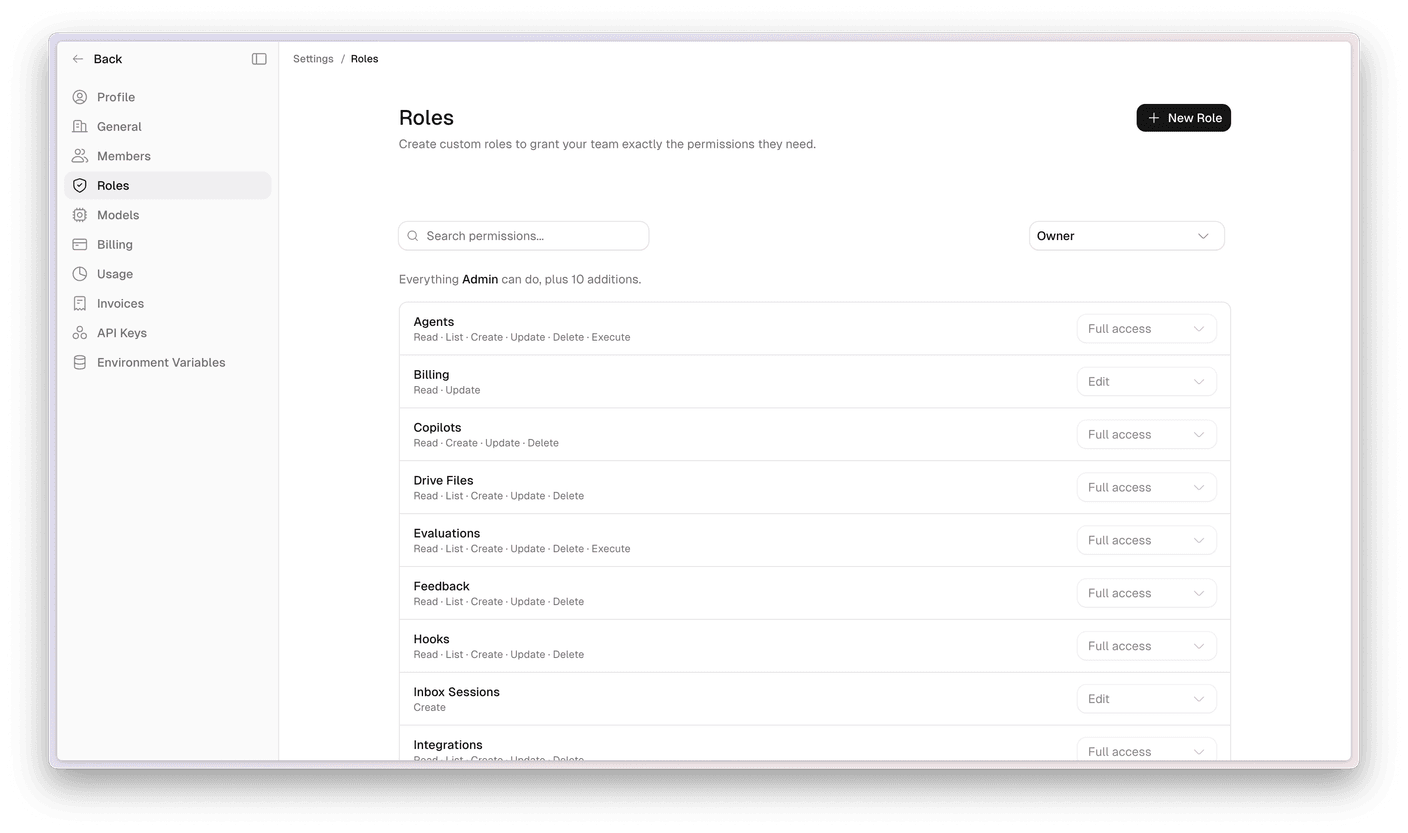
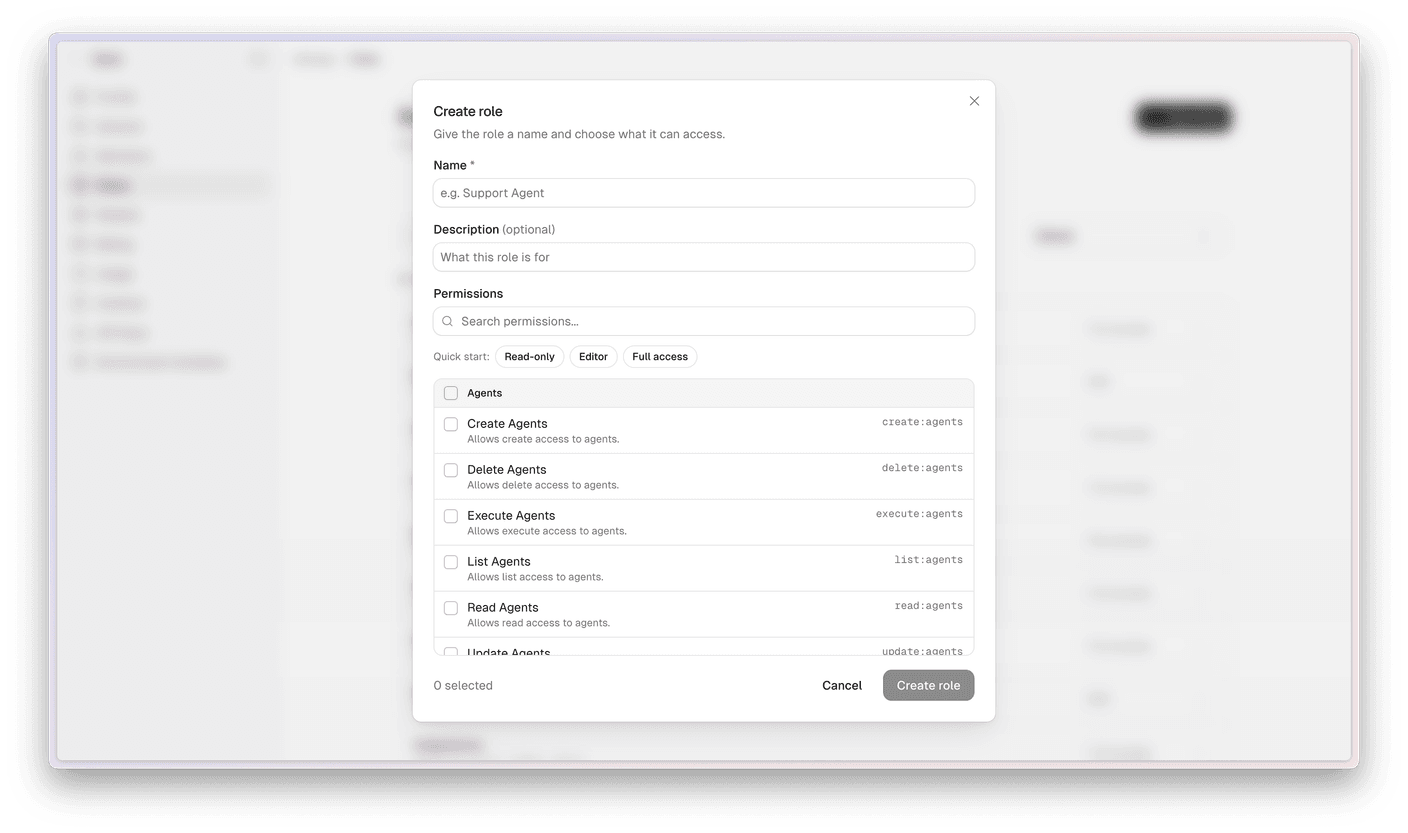
Create a custom role
Owners can create custom roles. Open the workspace switcher, choose Settings, then Roles. Click New Role, pick a Read-only, Editor, or Full access starting point, and adjust permissions from there.
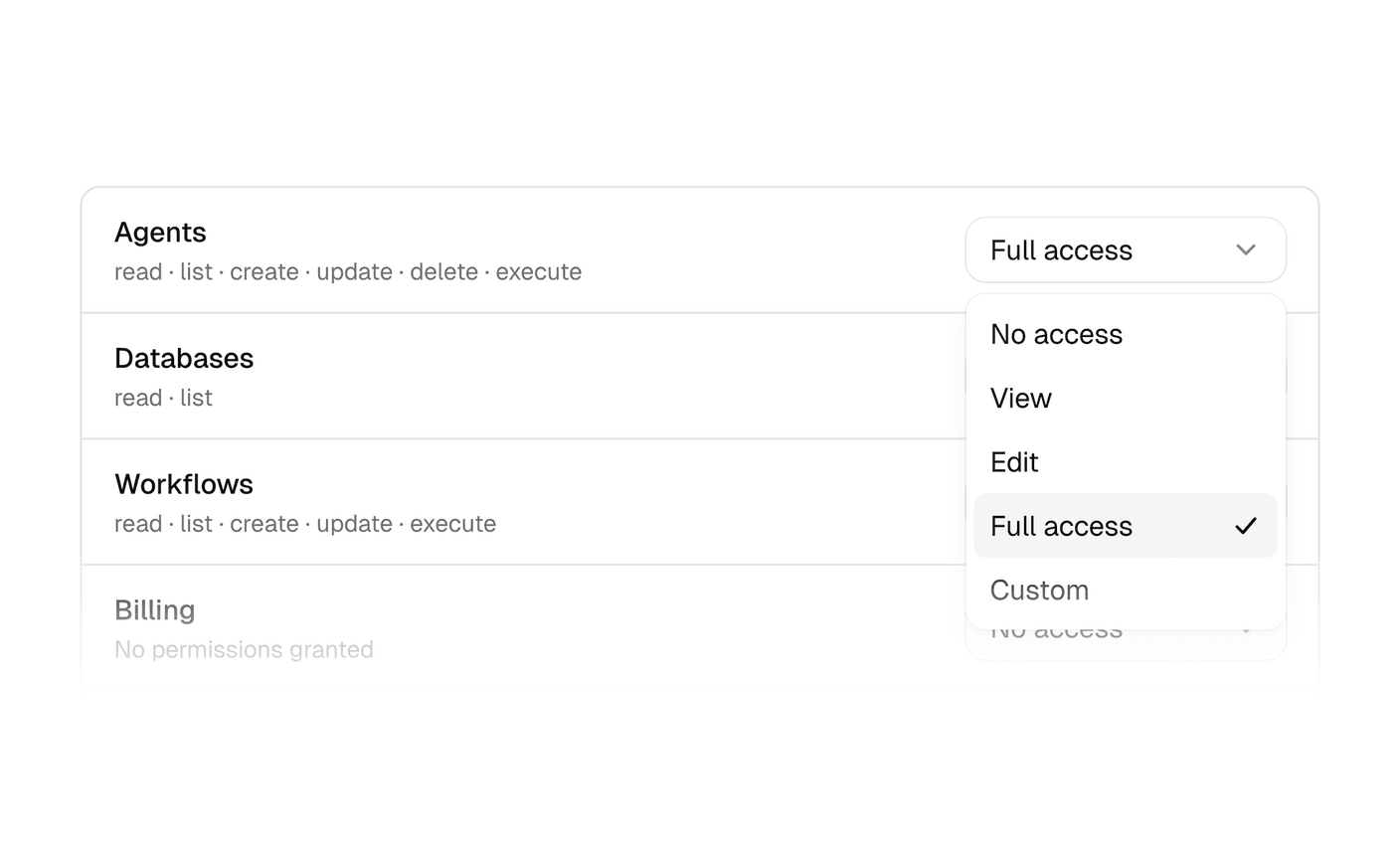
For each resource you can set View, Edit, or Full access. A common example is a support role that can run agents and view Drive, but cannot edit workflows or manage members.
Assign roles
Assign roles from Settings → Members when you invite someone, or later with Edit role. Owners and Admins can assign roles. Only Owners can create or change custom roles.
You cannot change your own role. Ask another Admin or Owner to update it. If you delete a custom role, anyone still assigned it loses those permissions, so move people to another role first.
Log in to Scout and open Settings → Roles if you are an Owner. See the Roles guide for more on permissions and assignment.
MCP Server
Your best work doesn't all happen in one place. You're in Cursor, Claude Code, or Codex, and Scout is where your agents, automations, and data live. Until now, connecting the two meant custom glue code or a local server to manage.
Not anymore. Scout now has an official, hosted MCP server. Any MCP-compatible client can connect straight to Scout and work with your resources through standard tool calls, so your agents can run a workflow, query a database, or pull a file from Drive without ever leaving the tool you’re already in.
Because it’s hosted by us, there’s nothing to install, run, or keep up to date. And every connection is secure by default, scoped to exactly what your token is allowed to do.
Getting connected
Point your client at the endpoint
https://mcp.scoutos.com/mcpand authenticate with your Scout token:Authorization: Bearer YOUR_SCOUT_TOKENSetup takes about a minute in Claude, Claude Code, Codex, Cursor, VS Code, and v0. Here are a couple of examples. In Claude Code, one command adds the server:
claude mcp add --transport http scout https://mcp.scoutos.com/mcpOr drop this into Cursor, VS Code, or any client that takes JSON config:
json { "mcpServers": { "scout": { "url": "https://mcp.scoutos.com/mcp", "headers": { "Authorization": "Bearer YOUR_SCOUT_TOKEN" } } } }Full per-client instructions and verification steps live in the setup guide.
What you can access
Once connected, your client discovers Scout’s tools automatically. From there, you and your agents can:
- Workflows — list, create, and run your Scout workflows
- Agents — list, upsert, and chat with your agents
- Databases — create and inspect collections, tables, and views
- Documents — create, update, and batch-edit table records
- Triggers — list, create, update, and fire triggers
- Drive — upload and download files
Grab a token from your API key settings, point your client at the endpoint, and you’re live.
We can’t wait to see what you and your agents build with it.
Universal Search (Cmd+K)
You can't use what you can't find. We fixed that.
Most platforms solve for creation. Almost none solve for retrieval. Then navigation quietly becomes the bottleneck.
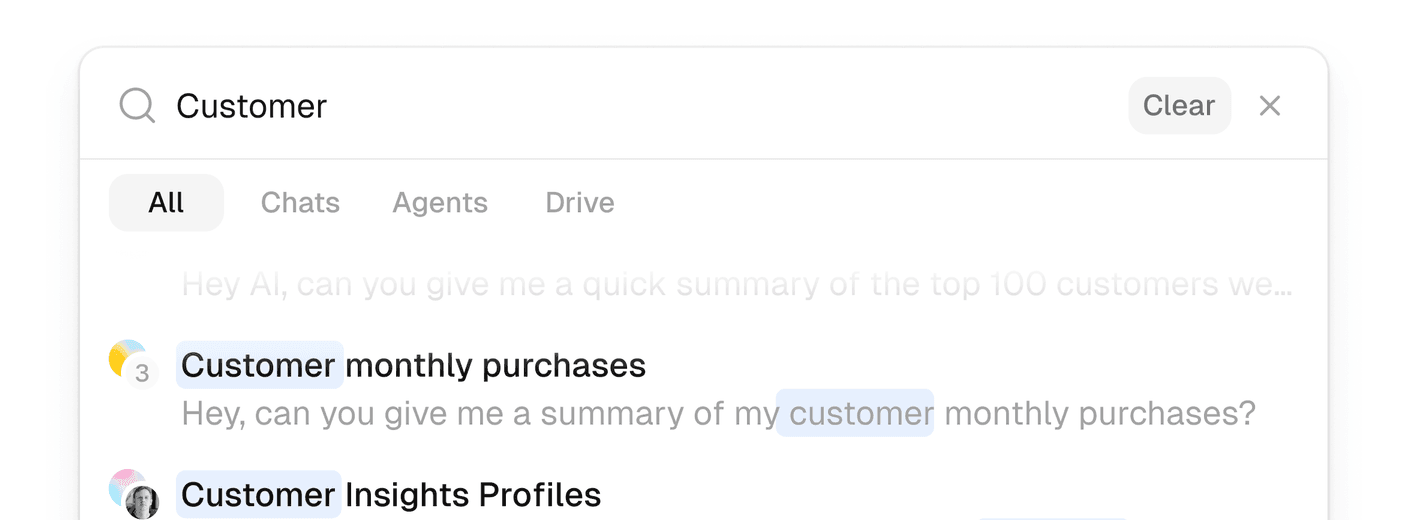
That's why Universal Search (Cmd+K) is now live in Scout. One keystroke. Everything searchable.
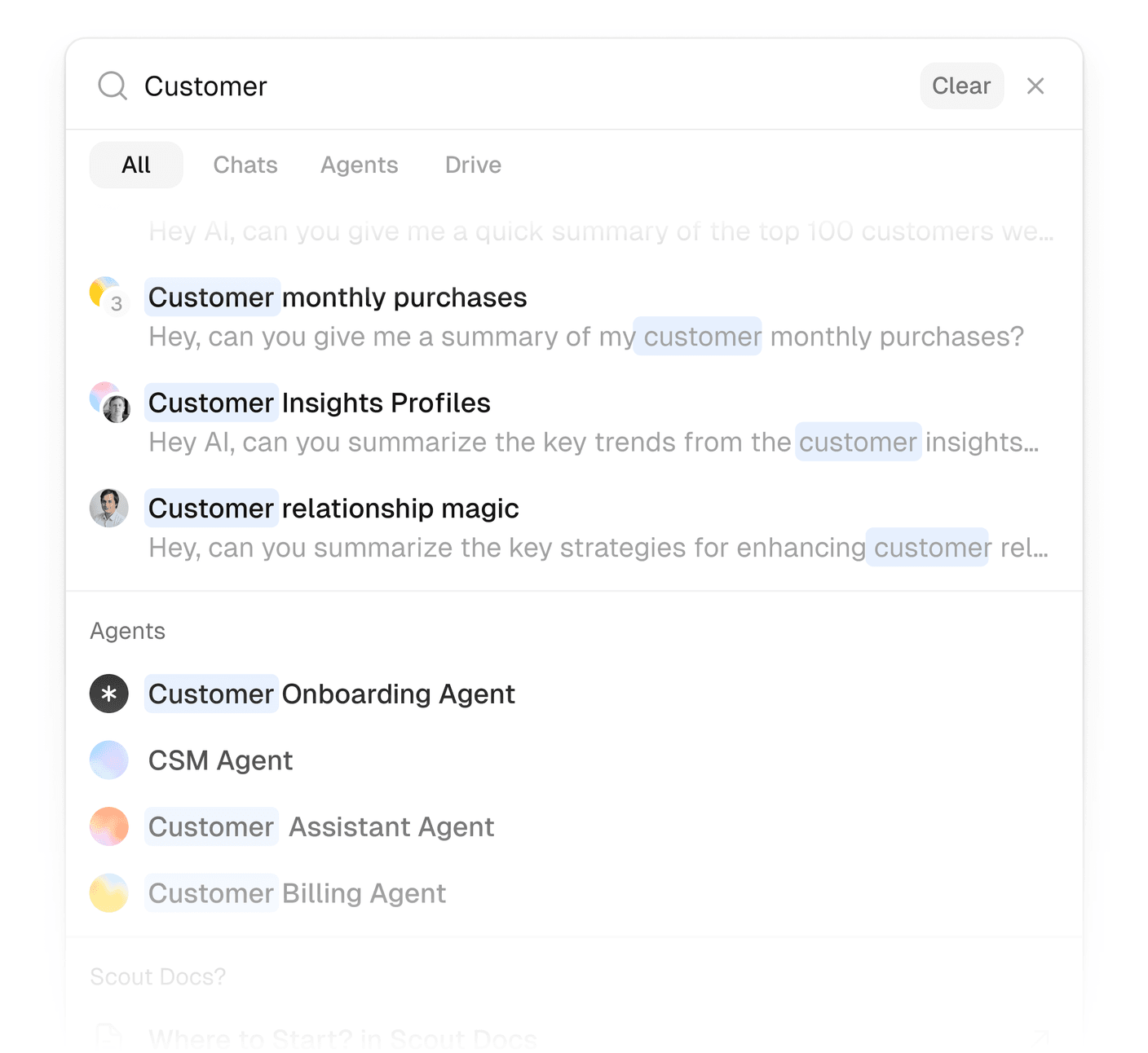
Here's what you'll find with it:
- Universal search — every resource type in your org, from a single surface
- Instant commands — create, navigate, and launch without touching a menu
- Recent-aware — surfaces what you were last working on, no searching required
- Built for scale — build as many agents as you want, and find them…easily
Every second hunting for a resource is a second not using one. Let us get you to work faster.
Log in to Scout and press Cmd+K to check it out.
Model Management
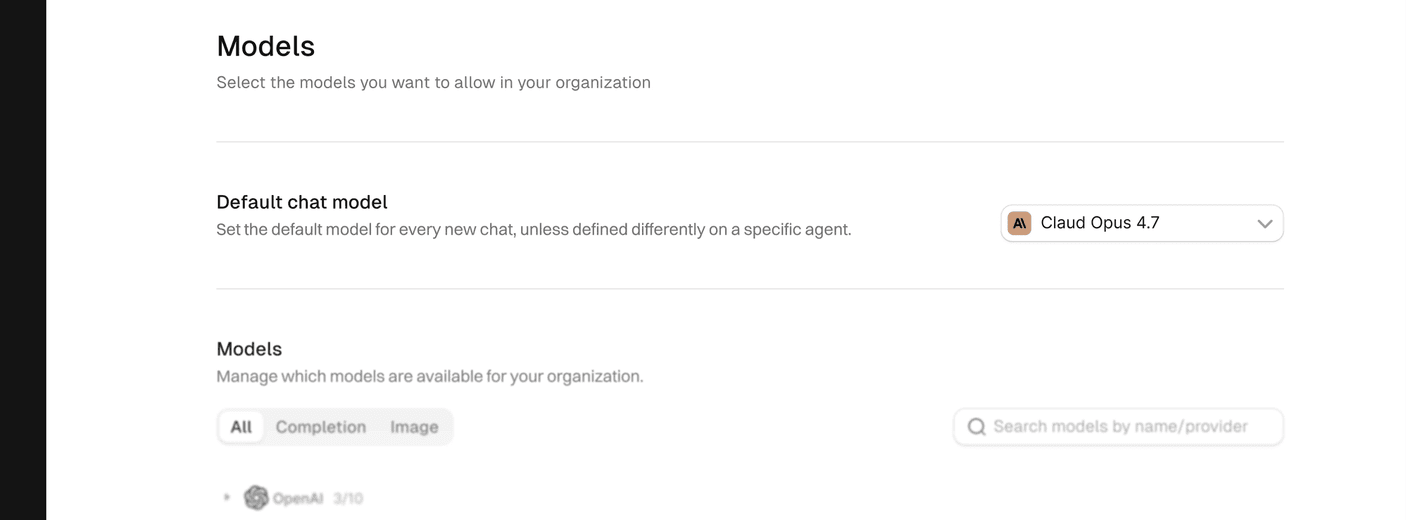
With Model Management this means you can now:
- Ensure agents only use models your org has vetted and approved
- Keep costs predictable by limiting available options
- Set a cost-efficient default for everyday use while keeping powerful models available for specific agents
- Modify models assigned to existing agents in individually or in bulk
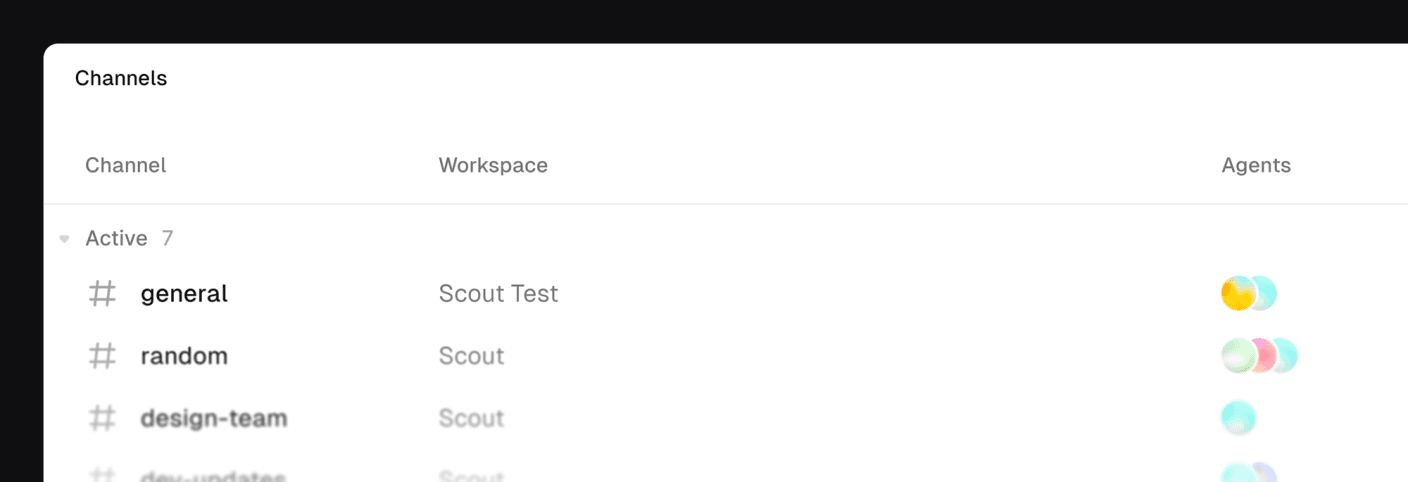
Enhanced Slack Deployments
We simplified the experience to make it easier to view and manage your Scout agents deployed via Slack.
As a reminder, you'll still need to enable the Scout for Slack app to your Slack workspace. In addition, manually add Scout for Slack to any private channels to make them available in Scout.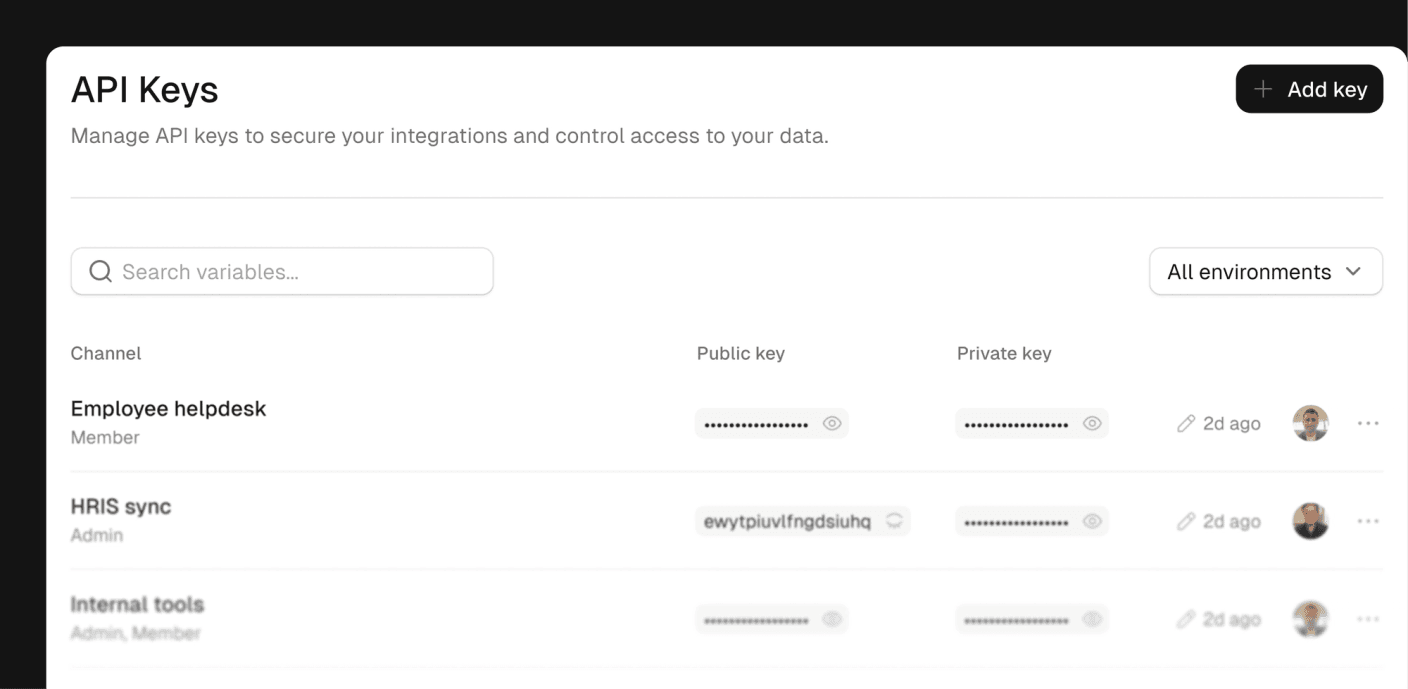
API Keys
Scout now gives organization admins full control over API credential management. You can create and manage public/private key pairs, attach custom roles and permissions to each one, and enable, disable, or revoke them at any time — all from the console. Permissions follow a simple
action:resourcepattern, and you can use platform-defined roles or build your own.The design is intentional: Scout handles authentication and authorization, and you handle everything else — what credentials you issue, who gets them, what they can do, and how long they're valid. Your keys, your rules.
Ready to get started?
Book a demo or chat live with a Scout engineer.